What items are banned from a dumpster rental?
Household hazardous waste tops the list: old paint cans, solvents, pesticides, and anything with a warning label about flammability. Car batteries and tires cannot go in either, even if you're clearing out a garage during a home renovation porta potty project that already has a dumpster on site. Appliances with refrigerant, like fridges and window AC units, need separate handling because of the coolant inside. Electronics with screens or circuit boards, often called e-waste, are also off the list at most facilities.
Asbestos-containing material is a hard no, whether it's old siding, floor tile, or insulation pulled during a Bellingham remodel. Medical waste, including needles, is never allowed loose in a bin. If you're not sure whether something qualifies, check what cannot go in a dumpster rules with your hauler before loading starts, because contaminated loads can trigger extra charges under the terms most rental agreements spell out. A load with banned material sitting under a foot of drywall scraps is still a banned load. For jobs generating this kind of mixed debris, pairing a construction dumpster rental with a clear list of exclusions up front saves a second trip.
Can I put wet paint or chemicals in a dumpster?
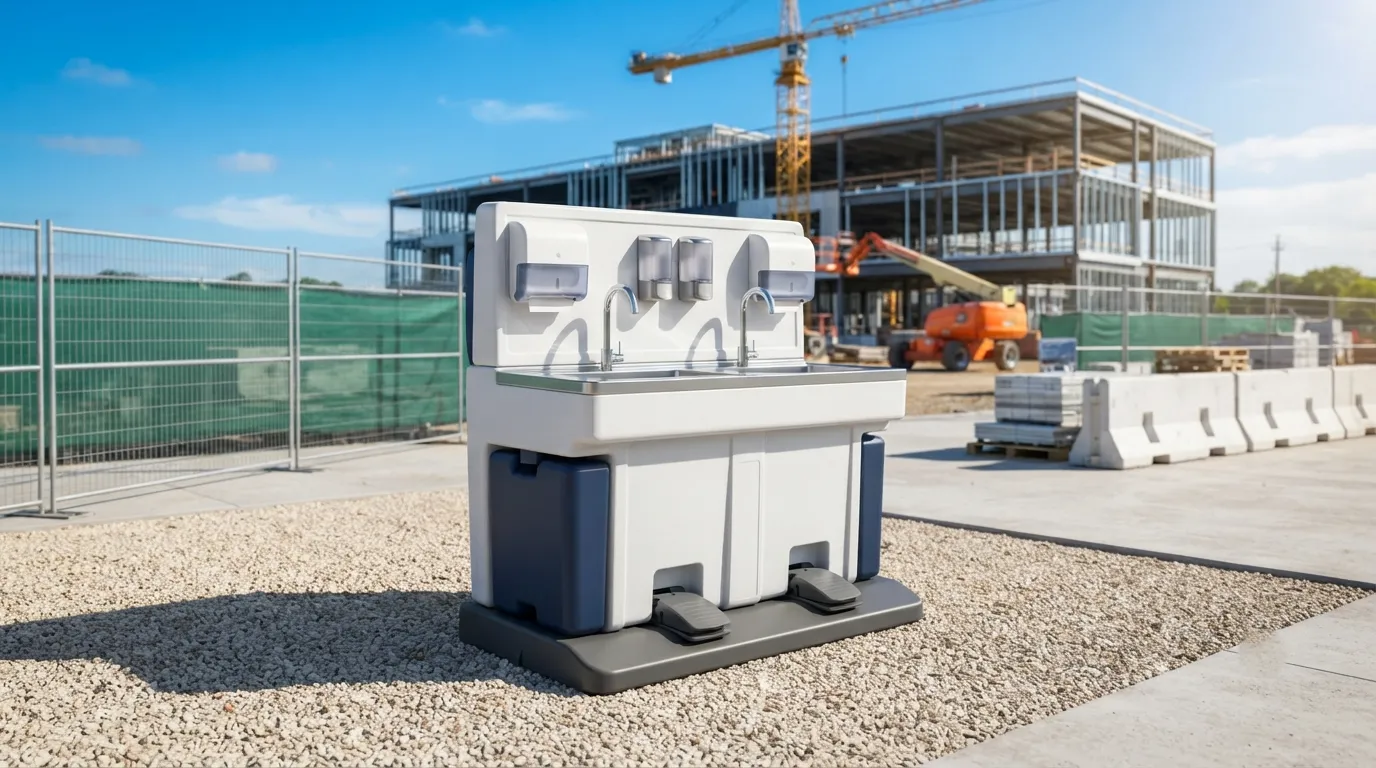
No. Wet paint, stains, and most chemical residues count as hazardous waste and cannot go in with construction debris. Dried latex paint is sometimes accepted once it's fully solid, but oil-based paint, thinners, and adhesives are excluded regardless of condition. If a crew has been applying coatings or herbicides on site, OSHA 1926.51(f)(1) requires washing facilities for workers exposed to those contaminants, which is a separate need from disposal but often comes up on the same job. A handwashing station rental or a portable sink rental covers that requirement without complicating what goes in the bin. Keep chemical containers, even empty ones with residue, out of the dumpster and set aside for proper drop-off. This matters most on renovation and demo jobs in Bellingham, where old cans of stain or solvent turn up in garages and sheds more often than people expect.
What happens if I put a banned item in my dumpster?
The hauler can refuse to pick up the load, or charge a fee to remove the item and re-sort the bin. Weight is part of this too. A dumpster loaded past its rated capacity, or one carrying a banned item mixed into general debris, is grounds for the crew to leave it behind until it's corrected. Details on load limits are covered on the dumpster weight limits page, and size specs for each bin are listed under dumpster sizes and dimensions. Renting a 10 yard dumpster rental for a small cleanout or a 20 yard dumpster rental for a kitchen remodel only works smoothly if the excluded items are set aside separately from the start.
Delivery access matters here too: a roll-off truck needs about 60 feet of straight clearance behind the drop point, so plan the spot in your driveway or lot with that in mind before the truck shows up. If your job is large enough to need a 30 yard dumpster rental or 40 yard dumpster rental, sorting hazardous material out ahead of time keeps the whole load usable instead of risking a refusal.
Where do I take items that can't go in the dumpster?
Most banned items, paint, batteries, tires, and electronics, need to go to a household hazardous waste facility or a specialty recycler rather than a general dumpster. Check with Bellingham's public works or solid waste department for current drop-off locations, since these facilities and their hours vary and change more often than dumpster rules do. If you're clearing a property with a septic system as part of the same project, that's a separate service entirely. Our septic pumping service page covers tank pumping, and a typical 1,000 gallon residential tank is pumped every 3 to 5 years depending on household size and tank capacity. Grease from a commercial kitchen is different again: a grease interceptor is pumped once fats, oils, and solids reach 25 percent of the liquid depth, which is covered under grease trap pumping.
For general dumpster pricing across sizes and rental lengths, see dumpster rental cost. If your city work involves shared job sites, our construction site services page ties dumpster, fencing, and toilet needs together for crews working around Bellingham and out toward Geneva, 3.8 miles east, or Ferndale, 11.0 miles northwest.
Can I throw away furniture or mattresses?
Yes, most furniture and mattresses are accepted in a standard roll-off dumpster. Some haulers charge a small handling fee for mattresses because of how they're processed at the landfill. Check before loading a large piece to confirm it fits the bin without exceeding dumpster weight limits.
Does yard waste count as banned material?
No, yard waste like branches and leaves is usually fine in a dumpster, though wet, heavy loads of dirt or sod can push you over the weight limit fast. Ask your hauler if a separate yard waste bin makes more sense for a large landscaping cleanup.
Can I put concrete or brick in a roll-off?
Only in limited amounts. Concrete, brick, and asphalt are heavy enough that most dumpsters have a separate weight allowance for them, sometimes requiring a dedicated heavy-debris bin instead of a standard one listed under dumpster sizes and dimensions.
What about propane tanks or fuel containers?
No. Propane tanks, gas cans, and anything pressurized or flammable cannot go in a dumpster, empty or full. These need drop-off at a hazardous waste site, similar to paint and solvents.
Can I rent a dumpster for a permit-required demo job?
Yes, but check first. Some demolition projects in Bellingham require permits before debris removal starts. See dumpster permit requirements to confirm what applies before scheduling delivery.
Next step
Get a delivery date
Tell us the address, the dates and the headcount. We size the order and confirm the route.